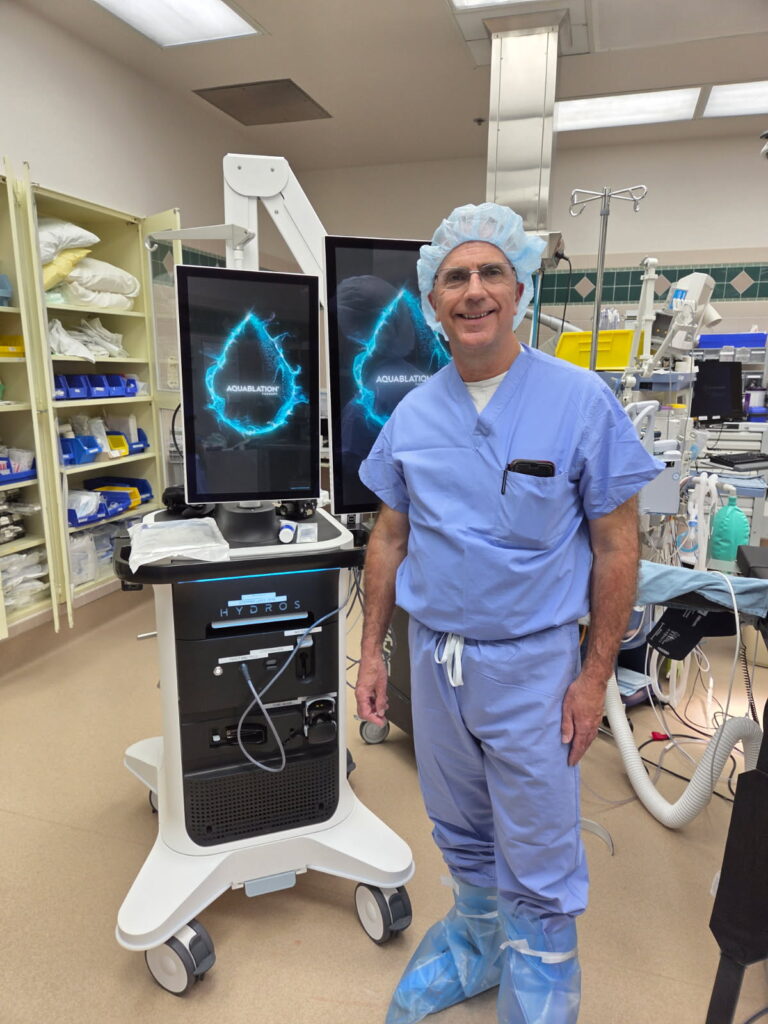
UnityPoint Health–Trinity now has the first robotics treatment for men with an enlarged prostate.
The Quad Cities’ first HYDROS Robotic System for Aquablation is offering a new option for men dealing with benign prostatic hyperplasia (BPH), or an enlarged prostate. BPH is one of the most common urological issues in the U.S., and this minimally invasive procedure provides a modern approach to treating it. Aquablation combines real‐time imaging with a high‐velocity, heat‐free waterjet to precisely remove excess prostate tissue, helping relieve the urinary symptoms that come with BPH.
“Aquablation offers a number of benefits for patients,” said Dr. Morris Gist, UnityPoint Clinic Urology – Moline. “Unlike traditional surgery, it uses a physician‐controlled robotic system to remove the enlarged, benign parts of the prostate causing blockage.”
Dr. Gist added that patients with BPH often opt for medicinal treatment over surgery, because of concerns about complications affecting sexual or urinary function. Aquablation minimizes these risks, with the goal of eliminating or reducing reliance on medicine.
“Studies show this approach carries a lower risk of permanent side effects and helps people experience lasting relief and an improved quality of life,” he said.
UnityPoint Health – Trinity obtained the area’s first surgical robot in 2008. Since then, surgeons at Trinity have performed more than 9,900 robotic-assisted surgeries, and the hospital has continued its investment in robotic technology for less-invasive treatments and better patient outcomes.
Across UnityPoint Health, the organization completed more than 8,700 robotic-assisted surgical cases in 2025 across 13 locations.
Trinity currently has four robotic surgical systems including the Mako SmartRobotics (partial and total joint replacements); ION Robotic System (minimally invasive lung biopsies), da Vinci Xi Surgical System (thoracic surgery for lung cancer, as well as urological, bariatric, gynecological and general surgeries); and now the HYDROS Robotic System for Aquablation.
Individuals with urinary concerns are encouraged to talk to their primary care provider or contact a urologist.