The Quad Cities now has a “practical framework” to battle and reduce homelessness in the region.
That framework calls for spending nearly $9 million to support housing interventions, family stabilization efforts, rapid-resolution services and much more to reduce homelessness in the QC.
Those recommendations are coming in a new regional report that outlines a practical, evidence-based strategy to reduce unsheltered homelessness across the Quad Cities through coordinated investments, shared goals, and unprecedented collaboration across city, county, and state lines. That report was made public early Friday, June 26.
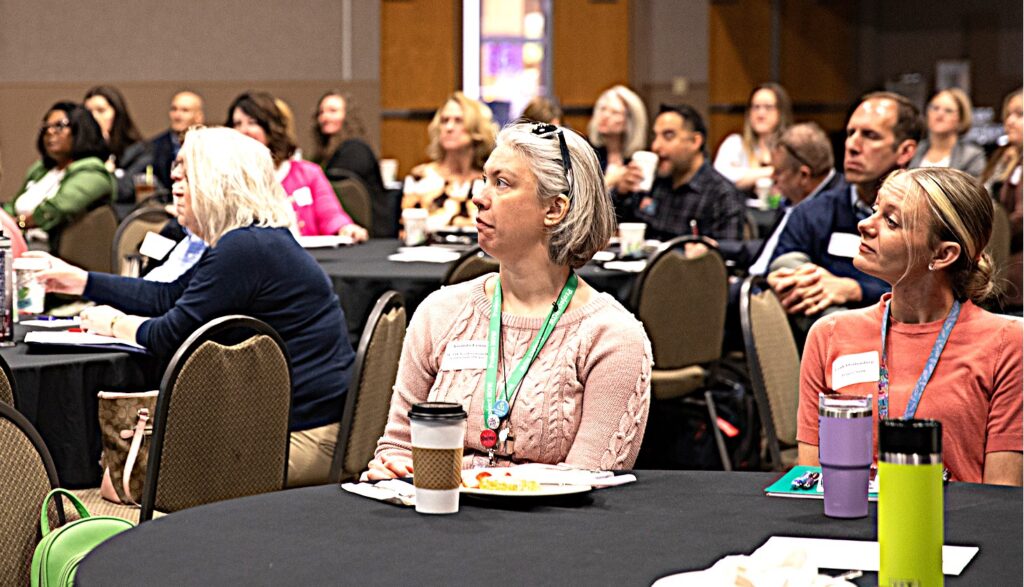
The report emerged from a regional momentum-building event held in April that brought together more than 100 leaders from the nonprofit, public, and private sectors. Hosted by the Quad Cities Community Foundation and Downtown Davenport Partnership, (DDP), the gathering focused on identifying proven approaches to help the Quad Cities respond more effectively to homelessness and prevent more people from entering the system.
Some of the topics discussed during the initial event included: emerging practices to end and prevent homelessness; activating the region; and a framework for deeper planning.
That discussion was facilitated by Clutch Consulting Group, a nationally recognized firm that partners with communities to move beyond planning into coordinated action on homelessness. Community leaders at the event said the session is helping participants establish a shared regional goal, identify gaps and opportunities, and build momentum toward a more aligned, bi-state approach.
As a result, the new report released this week presents a roadmap for helping more than 1,500 adults and families each year avoid or exit homelessness while creating a more coordinated regional response to unsheltered homelessness.
“Our region has an opportunity to act together around a shared strategy that is grounded in data, proven results, and the strengths that already exist across the Quad Cities,” said Sue Hafkemeyer, president and CEO of the Quad Cities Community Foundation. “We now have a practical framework for how communities, institutions, funders, service providers, and residents can work together to drastically reduce homelessness in our region.”
Snapshot of QC homeless
The report identifies several important realities about homelessness in the Quad Cities:
- Approximately 1,200 single adults and 360 families enter homelessness annually across the region.
- The overwhelming majority of those experiencing homelessness are newly homeless, with 81% of adults and 88% of families entering homelessness for the first time or during a short-term crisis.
- A relatively small group of individuals experiencing long-term homelessness accounts for much of the region’s unsheltered homelessness — creating an opportunity for targeted interventions.
“The path forward means aligning resources toward rapid intervention, housing-focused solutions, and targeted support for people with the most complex needs,” Kelly Thompson, the foundation’s vice president of strategic initiatives, said in a news release announcing the report. “This is a proven strategy that has produced measurable results across the country. Now we have to collaboratively design what this work could look like in the Quad Cities, taking into account our existing resources and infrastructure, and what would need to be changed or created. It all begins with stronger regional coordination.”
Phase One of the plan would require approximately $8.9 million over two years to support housing interventions, family stabilization efforts, rapid-resolution services, complex case coordination, and regional management capacity.
Leaders involved in the initiative stress that the report represents the beginning of a community-wide process rather than a final decision. Organizers are already engaging government leaders, service providers, business representatives, funders, and community members to help shape implementation strategies and explore the creation of a regional steering committee to guide the work forward.
“This report provides a strong direction, but meaningful progress will require broad community commitment,” said Kyle Carter, executive director of the Downtown Davenport Partnership, an affiliate of the Quad Cities Chamber. “We are asking the public to continue supporting the organizations and agencies on the front lines of this challenge, and for our community partners from every sector to reach out, engage with this plan, and help shape what comes next.”
Affordable housing programs
The goal of providing more housing to people in need has been the focus of several recent efforts in the Quad Cities. For instance, a grand opening celebration was held in the spring for the new $10 million Carol’s Village Gardens apartment complex, located at 820 Harrison St., Davenport.
The Carol’s Village facility offers one- and two-bedroom apartments designed to provide safe housing, with six units specifically for individuals transitioning out of homelessness. Located on the campus of Vera French’s Carol Center at 808 Harrison St., Carol’s Village Gardens (CVG) was developed jointly by the Vera French Community Mental Health Center, Vera French Housing and the Vera French Foundation.
“Carol’s Village Gardens reflects a shared commitment to improving lives across the Quad Cities. By expanding access to supportive housing, this project helps strengthen well-being, reduce strain on public systems and create lasting, positive impact in the community,” according to a statement from the QC Chamber of Commerce.
“Housing is health care. It’s not a luxury. … It’s the foundation on which recovery is built,” said Dr. Rich Whitaker, the CEO of Vera French Community Mental Health Center, during the April grand opening ceremony.