CLINTON, Iowa – Efforts to bring a massive data center to this community might run into a 120-day moratorium delay this week.
The Clinton City Council is scheduled to vote on an ordinance that creates such a moratorium at its Tuesday, June 9, meeting. That council meeting starts at 5 p.m. at Clinton City Hall, 611 S. Third St.
The moratorium would give “zoning authorities and the city council sufficient time to enact appropriate rules and regulations regarding data centers prior to said date centers being permitted and built in the city,” according to the ordinance.
QTS (Quality Technology Services) Data Centers wants to build an AI-driven data center campus north of U.S. Highway 30 and west of Mill Creek Parkway in Clinton.
“If approved, the proposed campus would represent a multibillion-dollar investment in the region, supporting thousands of construction jobs and creating hundreds of long-term careers, while also contributing to projects and initiatives that matter most locally,” according to a recent QTS statement shared this week by Grow Clinton.
The company added: “QTS is exploring the development of a data center facility in the Clinton area to support digital infrastructure used by businesses and organizations across the country. While plans are still in the very early stages, we are committed to sharing updates and listening to community feedback as this process continues.”
At the council’s May 26 meeting, Clinton residents took more than two hours telling the council they oppose the data center because of possible health concerns, high power consumption, and water usage, increased industrial noise and light pollution, heat generation, and air quality impacts.
During that meeting, some residents urged the council to approve a 120-day moratorium on such data center projects.
Andy Sokolovich, president and CEO of Grow Clinton, and a supporter of the data center project, recently sent a letter to the council members, urging them not to support a moratorium.
Part of that letter states: “It is important to recognize that a moratorium does not simply ‘pause’ development; it introduces uncertainty and risk that the community does not support or welcome the investment, regardless of the council’s intent. I am fearful that, if a moratorium is imposed, what guarantees does the developer have that it will be lifted once all demands from the council are met?”
Mr. Sokolovich also urged the council to do its own research on the data center project. If needed, simply delay issuing permits for the project while they consider its merits, instead of voting for a moratorium. “This action is critical as we work to attract high-value investment, expand our tax base, and position Clinton competitively within a global landscape,” the letter states.
“Developers, regardless of the industry, must comply with all applicable local, state, and federal regulatory requirements. Meaning, Clinton’s Building and Neighborhood Services department will be diligent and follow a strict permitting process. The misconception is that, without a moratorium, nothing prevents QTS from beginning construction. That is not accurate, and I hope our community leaders share that information with constituents,” said Mr. Sokolovich.
Even though many details on a possible data center have not been released, here is some of the information QTS has provided about the project:
- Economic impact: The project could generate $1.5 billion in taxable revenue. “These data center projects generate millions in local tax revenue annually, creating an opportunity to reduce tax burden for residents and support services and community programs,” according to the company.
- Jobs created: The data center is “expected to create thousands of construction jobs and hundreds of full-time positions, supporting local families and businesses and partnering with local building trades unions,” QTS said.
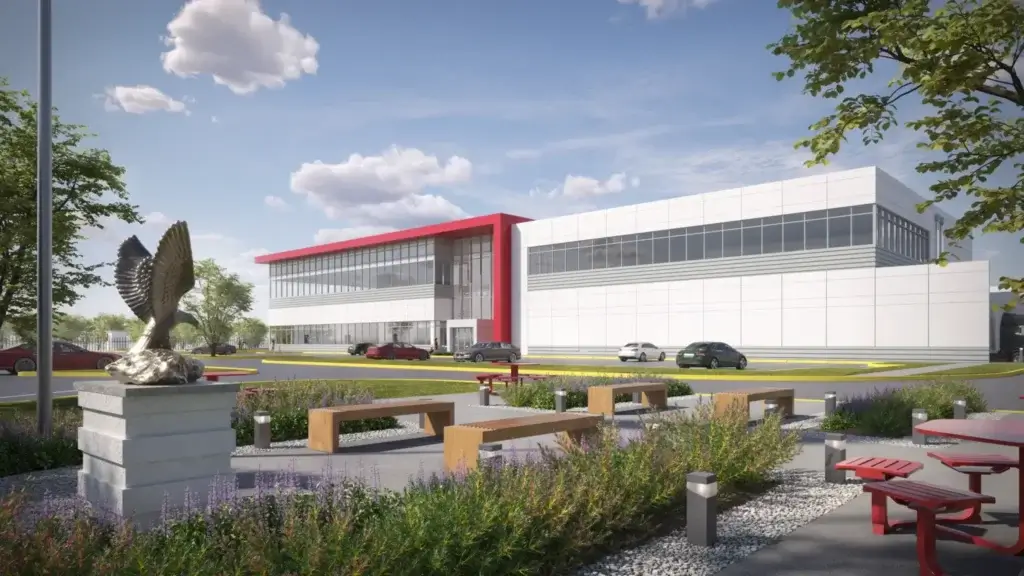
- Location, site plan and design: The data center could go west of Valley Oaks Golf Course and east of South 54th Street. The exact design has not been determined. “Although we are still in the early planning stages, we plan to minimize visual impacts on neighboring properties through substantial buffers and setbacks. We will incorporate buffer screens to conceal equipment from view and utilize landscaping techniques such as berms and enhance aesthetics.”
- Water usage: Data centers are built on a closed-loop cooling system that does not consume water for cooling, once operational. Water will be used for everyday building needs, such as bathrooms, kitchens, cleaning and landscaping. The usage will be equivalent to the monthly usage of about four households.
- Light pollution: QTS data center buildings are constructed to meet or exceed green building standards, which includes responsible lighting design. The lighting strategy will mitigate impact to wildlife and natural areas by implementing special lighting techniques. These include using directional lighting pointed downward and covered to reduce light pollution, lower wattage and brightness levels, motion sensors and automatic systems to avoid unnecessary lighting and landscaping to minimize light impact.
- Health impact: “A common misconception is that living near a data center poses increased health risks due to radiation. All buildings regardless of usage and occupancy emit electromagnetic radiation. In fact, data centers emit levels of electromagnetic radiation comparable to those of standard commercial or residential buildings. Extensive research has been conducted, and no evidence has been found to conclude that exposure to low-level electromagnetic fields is harmful to health,” said QTS.