As global financial experts share their 2026 economic forecasts, it’s easy to see what led the late Irish playwright and Nobel Prize winner George Bernard Shaw to quip: “If all the economists were laid end to end, they’d never reach a conclusion.”
All kidding aside, it’s easy to admire these highly educated and experienced economic prognosticators for getting it right as often as they do in an often volatile and global world. The truth is, however, there is no one-size-fits-all economic master plan for that world, our nation, or its regions.
To find out what some leading Quad Citizens believe the year ahead holds, in early December, QCBJ Editor Jennifer DeWitt invited a broad cross-section of those business leaders to share their own 2026 forecasts for the Quad Cities region, their companies and industry sectors. This the last section of that report.
The QCBJ staff is grateful to the 18 business and community leaders who took the time to share their plans, hopes and challenges even as they tended to their own organization’s end-of-year wrap ups and critical 2026 planning.
HOSPITALITY / ENTERTAINMENT
Keep focus on loyal, returning customers

Founder, Bummer City, Bettendorf
In a former life I was the operating partner of a few local Jimmy John’s franchises. When I started in 2008, a sub sandwich cost $4.35. When I left eight years later, it was $4.65. Now, that same sub is $7.19. While this is by no means breaking news, it is jarring to contextualize how much thinner the dollar has become after being reliably stable for so long.
We now find ourselves in an era of sacrificial choices, as the average consumer can’t easily adjust to drastic increases like these without making concessions: A nice dinner out vs. a concert ticket. New sneakers vs. a full grocery cart. That means consumers will be less likely to take a risk on something new and stick to what they know to be tried-and-true. Shift your focus from trying to get new bodies through your doors, and more on getting your existing customers to use you more often.
It starts with a commitment to quality. Growing margins by using cheaper materials is a race to the bottom, as customers can tell. Shrink your portions? Don’t even think about it.
Next, build relationships instead of trying to win the transaction. Stop tacking on hidden fees. Get to know your regulars and find ways to make them feel seen. When you make a mistake, don’t make it even. Go over the top to make it right.
No matter where the market goes, building trust will never go out of style.
CONSTRUCTION
Illowa council grows its IMPACT in Quad Cities

Executive Director, IMPACT — Illowa Construction Labor and Management Council, Moline
The IMPACT Agreement celebrated its most successful year ever in 2025, and 2026 looks to be even stronger. Led by the Illowa Construction Labor and Management Council, numerous public and privately funded IMPACT projects are currently in progress, with more scheduled to start throughout 2026, proving that the Quad Cities wants quality-built projects that are delivered in a timely manner using our local, skilled tradespeople.
Founded in 1985, the Illowa council created the IMPACT Construction Agreement as a means of improving labor relations between management and unions as well as to promote the construction trades.
With over 600 completed projects since its inception, the IMPACT Agreement continues to be the gold standard for our cities, educational institutions, private businesses, health systems, and nonprofits that want to reinvest in their communities.
We are enthusiastic about what the new year will bring.
NONPROFITS
SNAP cuts put higher demands on River Bend
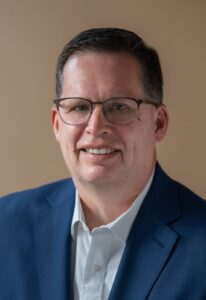
President & CEO, River Bend Food Bank, Davenport
River Bend Food Bank enters 2026 facing profound challenges as House Resolution 1 ushers in the largest overhaul of the Supplemental Nutrition Assistance Program (SNAP) in its 60-year history. SNAP already provides nine times more meals than River Bend Food Bank can distribute across its 23-county region, making any reduction or disruption in SNAP support especially consequential for families in eastern Iowa and western Illinois.
HR1 reduces federal SNAP spending by approximately $186 billion-$187 billion over 10 years, primarily through stricter work requirements, benefit reductions, and shifting financial responsibility to states. These changes will cause as many as 300,000 people per month nationally to lose benefits once the law is fully implemented.
For River Bend Food Bank, the implications are clear: any decrease in SNAP access will result in significantly higher food demand — demand that charitable food systems cannot absorb alone.
The expansion of work requirements, particularly for adults ages 55–64 and caregivers of children 14 and older, means that many households currently relying on SNAP may see benefits reduced or terminated. Given the high levels of food insecurity already present in the region and with hunger at a four-year high in late 2025, the community is positioned to feel these impacts acutely. In addition to the individual impact, we are concerned about the reduction in SNAP spending impacting grocery retailers, especially those in rural areas, where food insecurity rates are highest, and dependency on SNAP is vital.
As federal support retracts, River Bend Food Bank will face increased pressure to meet escalating need — compounded by the loss of state and federal food-purchase programs that previously helped strengthen local supply chains.
TRANSPORTATION
QCIA to build on success via business travelers
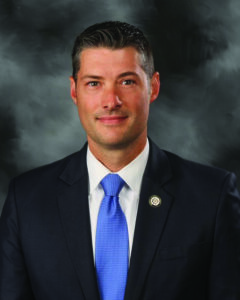
Executive Director
Quad Cities International Airport, Moline
The business climate in the Quad Cities and surrounding region will continue to directly influence our ability to expand air service, improve connectivity and remain attractive to airline partners who are making increasingly difficult fleet and network decisions.
Enouragingly, too, 2025 brought steady progress. The addition of a seasonal route to Sarasota with added daily frequencies to Dallas and Chicago increased scheduled seats in our market by 7.6%. Passenger growth kept pace most months with the increase in available seats.
In 2026, Delta will add a third daily frequency to its primary global hub in Atlanta. This is a significant milestone as it demonstrates Delta’s confidence in the market, and their interest in recovering lost market share coming out of the pandemic.
Business travel remains the primary driver of demand in the Quad Cities. We cannot grow air service unless the Quad Cities continues to grow high-quality jobs and businesses with travel needs. Airline confidence follows economic confidence.
Beginning in spring 2026, we’ll invest more than $20 million in the ongoing comprehensive renovation of our 40-year-old terminal, upgrading passenger amenities to exceed ADA standards, reconfiguring spaces to better serve travelers and modernizing core facilities, including restrooms.
At the federal level, shifting priorities with the current administration are shaping how airports pursue grant funding. The reprioritization of programs and a de-emphasis of DEI-related scoring components affect how we compete for critical infrastructure dollars. We’re also closely watching potential regulatory changes with TSA, including stricter REAL ID enforcement and new fees for noncompliance.