The timing could not have been better.
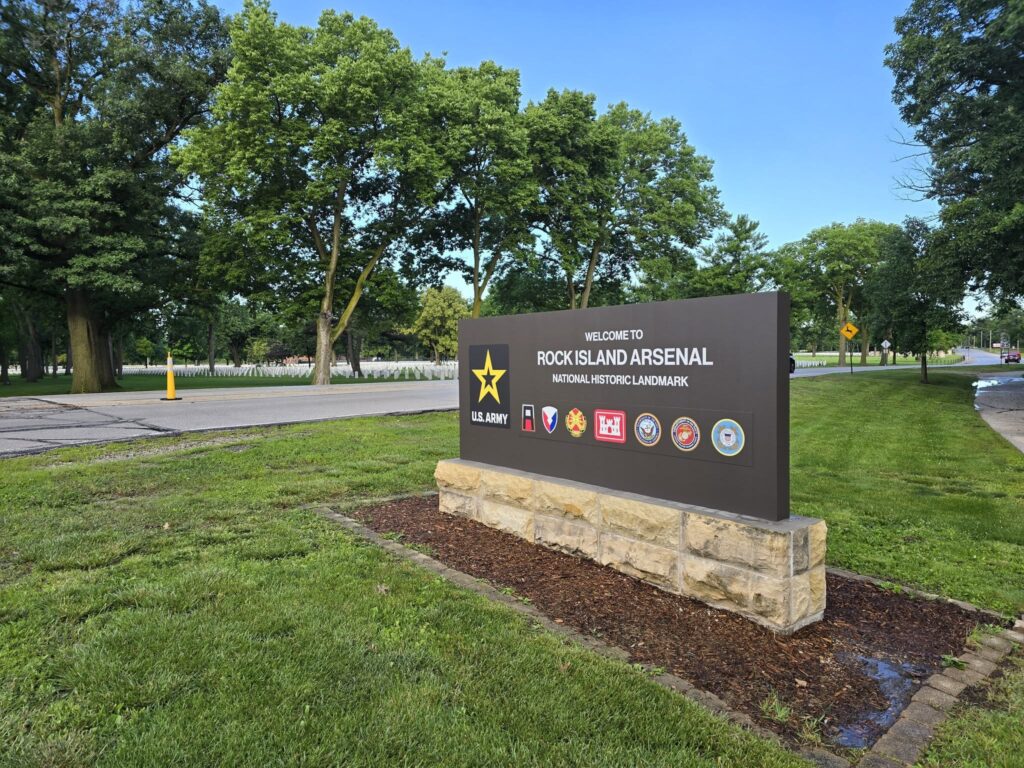
The Rock Island Arsenal held its first RIA 101 Media Day on June 24 to share the story of what happens inside one of the region’s most storied yet least visited landmarks.
Using the media to help tell that story is smart public relations, especially as Americans embrace a wave of nostalgia tied to the nation’s 250th birthday. Underlying that nostalgia is a deep respect and appreciation for the military.
The military is often among the most opaque of institutions. Any effort to shine a light on one so important, both to national defense and to the economic vitality of the region, is welcome.
Few institutions embody the arc of American history quite like the Rock Island Arsenal. Forged in the era of westward expansion and tested through every major conflict since the Civil War, the Arsenal today stands as a $1.2 billion economic engine for the Quad Cities and a symbol of American industrial resolve in the 21st century.
“People have to be a little open minded. … They will find different ways to experience the Arsenal,” said Col. William “Joe” Parker III, commander of U.S. Army Garrison at the Rock Island Arsenal.
Col. Parker acknowledged a persistent misconception that the Arsenal is difficult or unwelcoming to the public. He has described how many Quad Citizens perceive it as a “black hole in the middle of the Mississippi River.” His answer is straightforward: tell the story, open the doors and let the place speak for itself. An online visitor registration system is coming soon to make access easier. Until then, the public may visit through the Visitor Welcome Center at 23 Prospect Drive in Moline.
Openness matters for practical reasons, too. While the Arsenal serves a vital national interest, institutions of its kind can be reduced or restructured by shifting political and military priorities. A better informed public is a more engaged advocate.
With more than 50 organizations, roughly 6,000 workers and more than 80 military families on site, the Arsenal functions as a small city of its own. Its museum draws 25,000 visitors a year, houses Serial No. 1 of the M1903 Springfield rifle and now features a tribute to Henry Langrehr, a Clinton, Iowa, native and decorated D-Day veteran who died last year at age 100.
The Arsenal is extending an open invitation rooted in 150 years of shared history.
“Come play golf. Come to the museum. … We want to share the story of how great this place is,” Col. Parker said.
Opening up the Arsenal is good for the military and good for the region and will only help foster a deeper appreciation of this important yet largely misunderstood institution.