As global financial experts share their 2026 economic forecasts, it’s easy to see what led the late Irish playwright and Nobel Prize winner George Bernard Shaw to quip: “If all the economists were laid end to end, they’d never reach a conclusion.”
All kidding aside, it’s easy to admire these highly educated and experienced economic prognosticators for getting it right as often as they do in an often volatile and global world. The truth is, however, there is no one-size-fits-all economic master plan for that world, our nation, or its regions.
To find out what some leading Quad Citizens believe the year ahead holds, in early December, QCBJ Editor Jennifer DeWitt invited a broad cross-section of those business leaders to share their own 2026 forecasts for the Quad Cities region, their companies and industry sectors. This the first section of that report, the rest will appear in our newsletters throughout the week.
The QCBJ staff is grateful to the 18 business and community leaders who took the time to share their plans, hopes and challenges even as they tended to their own organization’s end-of-year wrap ups and critical 2026 planning.
We urge QCBJ readers to spend some time with these inspiring and cautiously optimistic business leaders who represent industries ranging from “A” (Agriculture) to “W” (Workforce) and everything in between.
They share some inspiring success stories as well as tips for grabbing opportunities and finding other ways to navigate old and new challenges in 2026.
FINANCIAL & INSURANCE
Balancing technology, talent to drive QC impact

CEO and President
Royal Neighbors of America, Rock Island
The Quad Cities are poised to define the next chapter of regional growth, and 2026 is our year to do it.
Housing remains affordable and quality of life continues to attract families and quality talent. Our core
industries, manufacturing, logistics, healthcare, financial services, and insurance, combined with a
strategic location, give us a strong foundation for meaningful progress.
The challenge will be to stay ahead of rapid changes in technology while ensuring our workforce is ready
for tomorrow. Automation, artificial intelligence, and digital tools are becoming core to how
organizations operate, driving efficiency and opening new opportunities for growth. But success
depends on cultivating talent that can adapt, innovate, and lead in this evolving landscape. That means
building strong partnerships with schools, vocational programs, and training initiatives to create a
pipeline of skilled professionals prepared for the future. It also requires investing in current
employees—upskilling, reskilling, and empowering teams to embrace new ways of working.
At Royal Neighbors, our strategy is rooted in a simple but powerful mission: to provide life insurance and
member programs that strengthen our communities and create lasting impact. In 2026, we have the
chance to take that mission even further by driving disciplined growth, pursuing bold opportunities, and
expanding our impact in ways that not only strengthen our organization and empower our partners but
also contribute to the long-term prosperity and resilience of the Quad Cities.
ECONOMIC DEVELOPMENT
Transformational growth ahead?
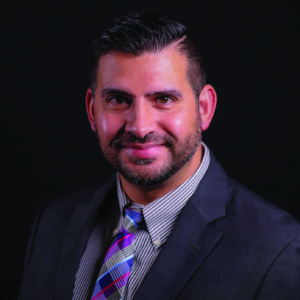
President & CEO
Quad Cities Chamber & Grow Quad Cities
The Quad Cities are on the precipice of transformational growth. Through the unified efforts and strategic collaboration of our community and economic development organizations, we’ve established a clear roadmap for success.
We expect 2026 to be a year of steady improvement for the Quad Cities economy. Over the past year, many businesses have faced challenges in planning and implementing new investments due to uncertainty surrounding trade policy and the macroeconomic environment. While the landscape has changed, particularly regarding trade, we see stability returning. As a result, investments that may have been delayed last year could start to move forward, which is a step in the right direction.
At the same time, increased adoption of Artificial Intelligence (AI) as a resource for increased productivity is likely to become an even more prominent force in 2026. AI tools are becoming more widely adopted, opening the doors to efficiency improvements and unlocking more investment opportunities across all industries.
In terms of economic development, this signals tremendous potential for the Quad Cities region. Whether foreign firms are responding to changes in trade policy or local and domestic firms are expanding due to productivity gains, businesses will look for a strong location for their investment. They are looking for a skilled workforce, strong supply chains, global access and communities with character — all attributes of the Quad Cities.
MANUFACTURING
OBBB provides tax certainty, creates tailwind
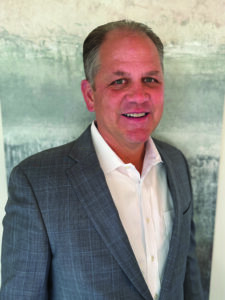
President & CEO,
Parr Instrument Company, Moline
The coming year brings with it cautious optimism. An economic factor providing a tailwind includes tax certainty with the passing of the OBBB (One Big Beautiful Bill Act) in 2025 that provides the clarity businesses need for planning.
The accelerated depreciation aspects of the bill should set the table for growth in capital spending which will be stimulative to many sectors of the economy including manufacturers.
The consumer side of tax policy is setting up to provide larger than average tax refunds after the 2025 filing season which could provide a boost to consumer spending.
A second tailwind is the Federal Reserve. It’s apparent they are in an easing cycle which is likely to be reinforced with the choice for the next Fed chairman. As the old saying goes, don’t fight the Fed.
Reasons for caution include further tariff uncertainty, federal spending cuts in areas of research and development projected to be down anywhere from 6% to 19%, and geopolitical uncertainty with a potential China-Taiwan conflict as well as a potential spillover of the Russian-Ukraine war.
As far as the Quad Cities economy goes, high employment, easing inflation and falling interest rates should be stimulative.
A recovery in the agricultural markets would be a big boost to the area, but it’s difficult to anticipate the timing of that being realized with the turmoil caused by trade policies.
HOSPITALITY/ENTERTAINMENT
Competition intensifies for entertainment spending
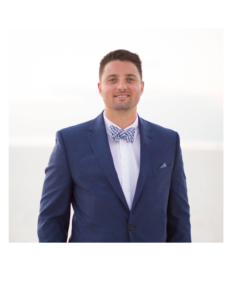
CEO, Iron Tee Golf
President, TBK Bank Sports Complex
Owner, Corn Belt Capital, Bettendorf
As we head into 2026, the climate for sports tourism, hospitality, and entertainment in the Quad Cities really breaks into two key demographics: sports tourism and the local customer.
Sports tourism in the Plex area should remain strong, and our focus is on continuing year-over-year growth in sports.
Demand is still there. Families, teams, and groups are traveling, especially to drivable destinations that offer convenience, value, and multiple experiences in one location.
On the local side, the Quad Cities community continues to show up for sports, practices, games, and entertainment. However, it’s a constant balancing act to understand the ebbs and flows of entertainment and food and beverage spending.
With new concepts regularly entering the market, businesses have to stay creative and intentional about giving local consumers a reason to keep walking through the doors.
The most pressing issues facing our industry remain labor efficiency, rising costs for goods and services, operational consistency, and capital planning. The operators who succeed will be those who plan labor proactively, invest in employees, simplify operations, and prioritize convenience. Consumers are less forgiving than they were a few years ago, and one bad experience can easily outweigh several good ones.
Capital planning is always top of mind. Reinvesting in facilities, technology, and infrastructure must be intentional for the consumer and consistently ROI-driven.
Whether the guest is local or visiting, expectations are clear: clean, modern, reliable, and easy to use every time. Continuous improvement is a journey at our facilities, not a destination.
CONSTRUCTION
‘Measured optimism, disciplined growth’
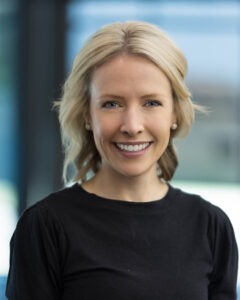
President, Russell, Davenport
The construction outlook in the Quad Cities reflects measured optimism and disciplined growth. While economic uncertainty and workforce pressures continue to influence project timing, demand for well-planned facilities remains steady.
Owners are moving forward with greater intentionality — prioritizing cost certainty, schedule reliability, and early collaboration. At Russell, this approach aligns with our core philosophy: leading with proactive planning, trusted partnerships, and disciplined execution to support sustained regional growth.
Across the construction and development industry, the most pressing challenges center on talent, speed, and adaptability. Long-term success will hinge on how well firms invest in their people and partner with clients. With labor availability tight, training, development, and a supportive culture remain essential. At Russell, we’ve nearly doubled our workforce as we’ve grown — devoting significant resources to onboarding and training to retain talent and deliver exceptional client service.
Clients expect team members to bring not only technical expertise but also strong communication and change management skills. Firms that excel will be those that clearly communicate cost, schedule, and risk, signaling a shift toward collaborative delivery, thoughtful technology adoption, and data-driven decision-making.
While supply chains have stabilized compared to recent years, expect continued volatility. Organizations that succeed will plan early, integrate procurement into overall project strategy, and leverage technology for clear, timely decisions.
In the Quad Cities, sustained investment in manufacturing and health care signals confidence in the region’s economic future. Growth will favor partners who combine disciplined execution with an owner’s mindset, treating collaboration and risk management as proactive tools that strengthen outcomes from the start.